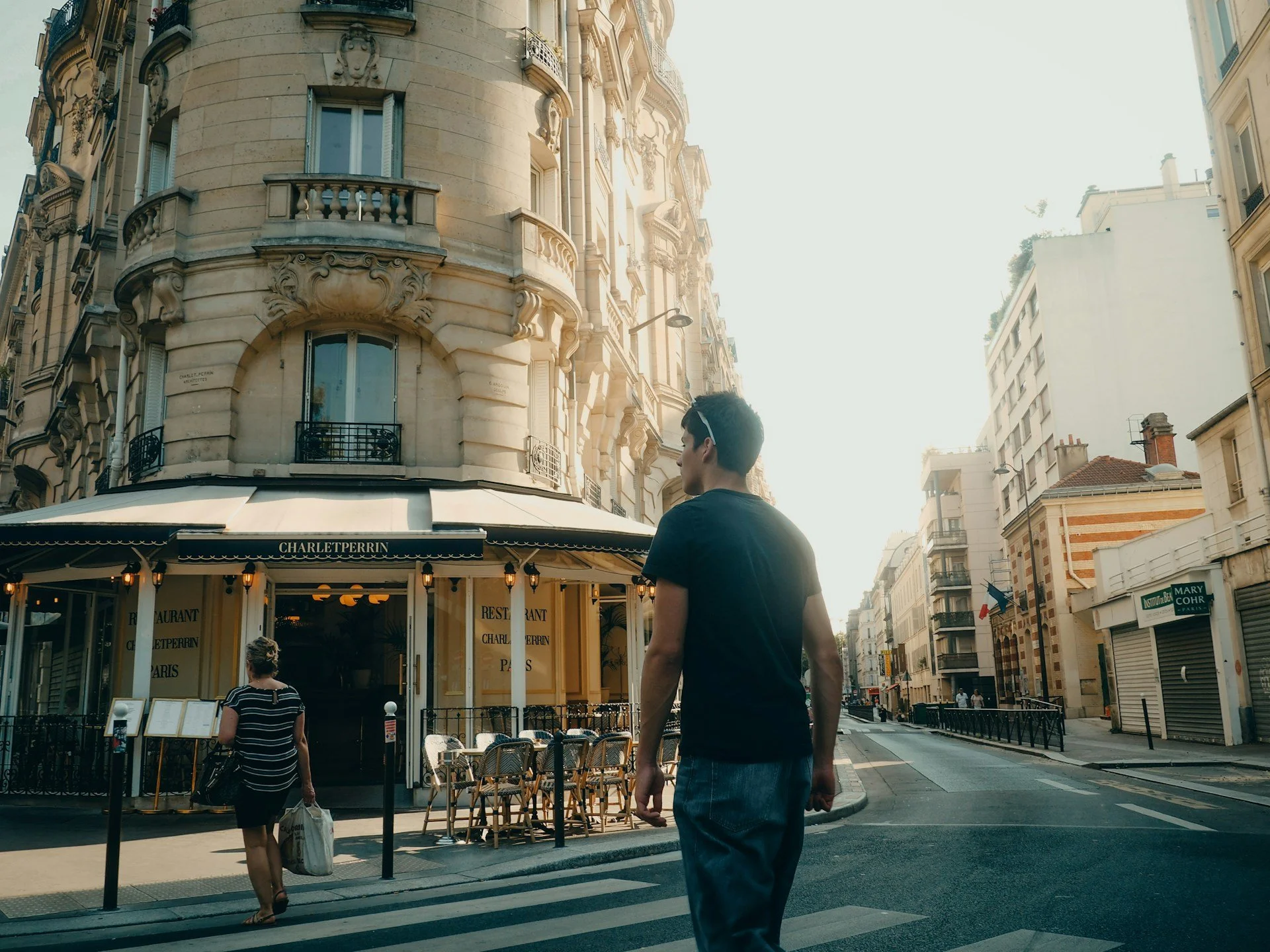
Some places give us an address. Others give us room to become.
I keep noticing that progress is changing its meaning.
It is no longer only about how quickly something can be built, how much a place can produce, or how impressive a city can look from a distance.
The question I find myself returning to is quieter than that:
What kind of future are we actually moving towards, and what kinds of places allow people to grow within it?
Increasingly, people seem able to sense when an environment fits them and when it does not.
The decision about where to live is not always simply about work, cost or convenience. Beneath those practical considerations can sit something much harder to measure: whether a place reflects something of who we are, how we want to live and what we believe might still be possible for us.
That feels increasingly significant at a time when so many of the systems surrounding everyday life are under pressure.
Housing, education, work, public trust, technology, climate, infrastructure and the cost of living are exposing tensions that cannot always be hidden behind familiar ideas of progress.
Some structures appear to have been built for circumstances that have already changed.
People feel that.
They feel it in the amount of effort required simply to remain where they are. They feel it in whether a city creates possibility or gradually narrows it. They feel it when the life they are trying to build no longer fits comfortably inside the system around them.
Cities as Signals
Cities have always told us something about where society is moving.
People gather where they sense opportunity.
Ideas gather there too.
When people relocate, invest, build businesses, collaborate or create in a particular place, they are choosing more than geography. They are responding to infrastructure, culture, energy, access, relationships and the possibility of becoming part of something that feels as though it is moving.
Some cities seem particularly alive to this.
It is not necessarily because they have the most polished skyline or the loudest claims about success.
Sometimes it is something less tangible.
A sense that ideas are allowed to move.
That people can begin again.
That new industries, conversations and communities have somewhere to take shape.
A city, after all, is not simply a collection of buildings.
It is an environment that either enables certain kinds of life or makes them unnecessarily difficult.
That is what makes the most interesting cities worth watching. They are not only asking what can be built. They are revealing what people increasingly expect from the places in which they live.
The Pull of Possibility
Innovation is often discussed as though it belongs primarily to technology, founders, investors or governments.
But innovation can also be seen in the choices ordinary people make.
It is present when someone leaves a familiar environment because it no longer gives them room to develop.
It can begin with frustration: a person notices that something could work differently and builds around the gap.
It can appear when a neglected part of a city becomes somewhere people suddenly want to gather.
Seen in this way, innovation is not only technical.
It is human movement.
It is the refusal to assume that the way something has always been done is necessarily the way it must continue.
And perhaps this is one reason certain places acquire momentum.
They are not only competing for companies, investment or talent.
They are competing for imagination.
They are asking people to believe that a different version of life might be possible there.
That belief can be extraordinarily powerful.
When Systems No Longer Fit
At the same time, movement between places is becoming more complicated.
People relocate for work, but also for safety, family, creativity, wellbeing, culture, community, belief and opportunity.
The question is no longer always simply, Where can I earn?
It can also be:
Where can I breathe?
Where might my ideas make sense?
Where can I build a life that feels more possible than the one available to me here?
Those are deeply personal questions, but when enough people begin asking them, they have wider consequences.
Patterns of movement affect neighbourhoods, economies, housing, businesses and institutions. Places attracting people must decide what kind of growth they want. Places losing them must confront different questions.
Movement tells us something.
Sometimes it reveals ambition.
Sometimes pressure.
Sometimes dissatisfaction.
Sometimes simply the desire for another way of living.
It should not automatically be celebrated or treated as failure. But it is worth noticing what people are moving towards, and what they believe they are leaving behind.
The Places That Shape Us
I have become increasingly interested in the idea that place is not neutral.
The city we live in influences more than our address.
It shapes the people we encounter, the pace of our lives, the opportunities available to us, what feels normal, and sometimes even what we imagine ourselves capable of doing.
Certain environments seem to enlarge possibility.
Others can make it difficult to imagine anything beyond what already exists.
That does not mean everyone needs the same type of city.
Quite the opposite.
One person may thrive inside a fast-moving centre of business and innovation. Another may need the rhythm of a smaller city, a coastal town or a place with a stronger sense of community. Someone else may find that geography matters less because their most meaningful networks now exist digitally.
Perhaps the important change is that more people are questioning the assumption that there is one correct version of where or how a successful life should be lived.
The city that grows one person may exhaust another.
The place that once suited us may not always continue to do so.
And perhaps recognising that is not disloyalty or restlessness.
It may simply be part of understanding ourselves more clearly.
What Our Movement Reveals
The changes taking place around us can easily be described only as disruption.
But change also reveals.
It shows us where systems are resilient and where they are fragile. It exposes the distance between the lives people are living and the structures intended to support them. It reveals which places can adapt and which remain attached to assumptions that no longer quite match reality.
And it makes me wonder whether the cities shaping the next era will be defined less by size or status than by their ability to respond intelligently to the people living within them.
Perhaps the future of a city will not be measured only by what it builds.
Perhaps it will also be measured by what it makes possible.
The ideas that can begin there.
The relationships that can form.
The lives people are able to construct.
The sense that a person does not have to become smaller simply to remain.
As people reconsider where they live, work, create and belong, cities may increasingly have to ask a question that is as human as it is economic:
Are we building places people can live in, or places in which they can continue to become?